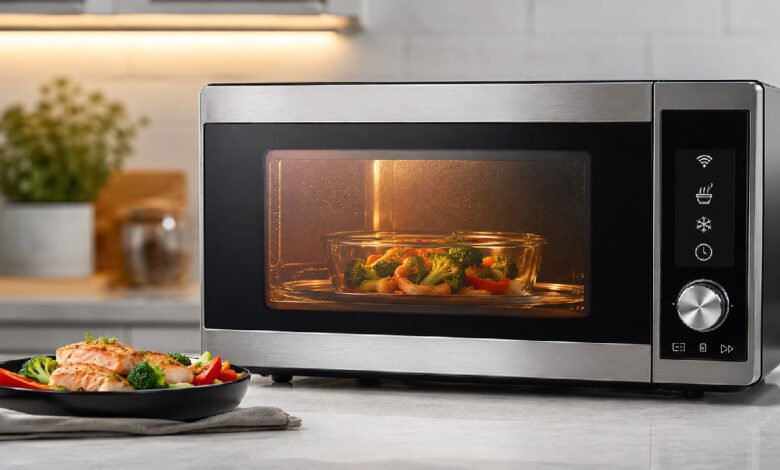
Microwey is a term that appears in online searches linked with microwave ovens, fast cooking, and modern kitchen technology. It is not a recognized scientific name or a clearly established appliance category. For that reason, this guide focuses on the real microwave technology connected with the term.
You will learn what Microwey may mean, how microwave ovens work, common uses, safety rules, energy efficiency, and smart features. We will also compare microwaves with ovens and air fryers and explain how to choose and maintain a microwave safely.
What Is Microwey?
Microwey is best understood as an informal term associated with microwave technology rather than the official name of a specific scientific system. People searching for Microwey may be looking for information about microwave ovens, quick food preparation, reheating, or newer smart cooking features.
Microwave ovens use electromagnetic energy to heat food. Modern versions may also include sensors, automatic programs, inverter-based power control, grills, or convection functions. The exact features depend on the appliance.
Because no single technical standard defines “Microwey,” it is safer to discuss it in connection with established microwave cooking technology rather than describe it as a unique product.
Microwey Meaning and Why People Search for It
The meaning of Microwey depends largely on how the term is being used online. In many cases, it appears to describe microwave-based cooking or a modern interpretation of microwave technology. Some people may also encounter it while searching for faster, smarter, or more convenient kitchen appliances.
The idea fits modern cooking habits well. Many households want appliances that can heat food quickly without requiring a large oven or long preparation time.
However, Microwey should not be confused with an official engineering term. The supplied material also describes it as a keyword connected with microwave ovens rather than established scientific terminology.
Is Microwey the Same as a Microwave?
Microwey and microwave are closely connected in the way the term is commonly presented, but they should not automatically be treated as two different technologies. A microwave oven is a well-defined appliance that uses microwave energy to heat food.
Microwey, by comparison, appears to be an informal or emerging label associated with that technology. It may sometimes be used to describe the idea of smarter microwave cooking.
For practical purposes, readers searching for Microwey are likely interested in microwave heating, modern microwave features, or kitchen convenience. There is not enough reliable evidence to describe Microwey as a separate standardized cooking technology.
How Microwave Technology Works
A microwave oven heats food using electromagnetic waves. Most household microwave ovens operate at a frequency close to 2.45 GHz. These waves interact strongly with molecules in food, especially water molecules, helping generate heat throughout the food.
A component called a magnetron traditionally produces the microwave energy. The waves enter the cooking chamber and reflect from its metal surfaces.
Heating is fast because the process transfers energy directly into the food instead of first heating a large oven chamber. However, microwave heating is not always perfectly even, which is why rotation, stirring, and standing time can remain important.
Main Parts of a Microwave Oven and Their Functions
A microwave oven contains several important components that work together. The magnetron generates microwave energy, while a waveguide directs that energy into the cooking chamber. The metal cavity helps contain and reflect the waves around the food.
Many models include a turntable that rotates food to improve heating consistency. Some designs use other distribution systems instead.
The control panel lets users select cooking time, power, and preset functions. Safety interlocks prevent normal operation when the door is open. Modern microwaves may also include humidity or temperature sensors that help adjust cooking automatically based on conditions inside the appliance.
How Modern Microwave Ovens Have Evolved
Early household microwave ovens mainly focused on basic timed heating. Today, many models offer much more control. Digital displays, automatic programs, sensor cooking, multiple power levels, and combination heating functions are widely available across different price ranges.
Some microwave ovens now include grill or convection systems, allowing users to perform tasks that older microwaves could not handle as well.
Other improvements focus on easier cleaning, better interior lighting, quieter operation, and more accurate power control. The basic science of microwave heating has not changed, but appliance design has continued to improve. Modern models aim to make cooking more predictable and convenient for everyday users.
Smart Sensors and Automatic Cooking Features
Sensor cooking is one of the useful developments found in some modern microwave ovens. Instead of relying only on a fixed cooking time, a sensor can detect changes such as moisture or steam released from food during heating.
The appliance can then adjust cooking time or power automatically. This may help reduce guesswork when reheating or preparing common foods.
Automatic programs work in a similar way but often depend on preset settings for specific food categories. These systems do not guarantee perfect results, because food size, shape, temperature, and moisture can vary. Still, they can make everyday microwave cooking easier and more consistent.
Inverter Technology and Microwave Power Control
Traditional microwave ovens often reduce power by switching full power on and off during a cooking cycle. Some newer appliances use inverter technology, which can provide more continuous and controlled power at lower settings.
This can be useful for delicate heating, softening food, or defrosting. More stable power may reduce the chance of cooking the outer edges too quickly while the center remains cold.
Inverter technology is not found in every microwave, and performance still depends on the specific appliance. It should therefore be viewed as one modern approach to microwave power management rather than a feature automatically associated with every Microwey-related product or search result.
Common Uses of Microwave Technology
Microwave ovens are useful for much more than reheating leftovers. They can warm drinks, defrost frozen ingredients, cook certain vegetables, soften butter, melt chocolate, heat prepared meals, and make simple snacks.
Many foods respond well to microwave cooking because heating is fast and requires little preparation. Steaming vegetables with a small amount of water, for example, can be convenient.
However, not every food is best suited to a microwave. Dishes that depend on browning, crisp crusts, or dry heat often perform better in an oven, grill, or air fryer. The best method depends on the desired final texture.
Benefits of Microwave Cooking
Speed is one of the biggest advantages of microwave cooking. Many reheating and cooking tasks can be completed in minutes. A microwave also usually requires little or no preheating, making it useful when preparing small portions.
Convenience is another benefit. Controls are generally simple, and cleaning is often easier than cleaning a large conventional oven.
Microwaves also take up less space than many full-size cooking appliances. This makes them useful in apartments, offices, student accommodation, and smaller kitchens. Their value is strongest for reheating, defrosting, and quick cooking rather than every type of baking or roasting.
Microwave Energy Efficiency Explained
Microwave ovens can be energy-efficient for many small cooking and reheating jobs because they transfer energy directly into food and usually operate for shorter periods. They also avoid heating a large oven cavity before cooking begins.
However, energy use depends on several factors. Appliance wattage, cooking time, food quantity, and the alternative cooking method all affect the final electricity consumption.
It is therefore inaccurate to say that a microwave always uses less energy than every other appliance. For suitable tasks, especially reheating smaller portions, microwave cooking can be an efficient choice. The supplied material also highlights direct food heating as a key efficiency advantage.
Is Microwave Cooking Safe?
Microwave cooking is considered safe when a properly functioning appliance is used according to manufacturer instructions. Microwave ovens use non-ionizing electromagnetic radiation. This is different from ionizing radiation associated with sources such as X-rays.
The metal cooking chamber and door design help keep microwave energy inside the appliance. Safety interlocks also stop normal microwave generation when the door is opened.
Microwave energy does not make food radioactive. The more common risks are ordinary kitchen risks, including burns, overheated liquids, hot containers, or uneven food temperatures. Damaged doors, seals, or internal parts should be inspected by a qualified technician before continued use.
Microwave-Safe Containers and Materials to Avoid
Choosing the correct container is an important part of microwave safety. Glass, ceramic, and containers specifically labeled microwave-safe are generally suitable when used according to their instructions.
Metal objects should normally be avoided unless the appliance manufacturer specifically permits them for a certain function. Metal can reflect microwave energy and may produce sparks or arcing.
Containers should also be vented when necessary so steam can escape. Very thin or unsuitable plastics may soften or become damaged when heated. When uncertain, check the container label and appliance manual. Using the correct cookware helps reduce accidents and protects both the food and the microwave oven.
Microwey vs Traditional Microwave Ovens
If Microwey is used to describe the idea of newer or smarter microwave cooking, the main difference would be the level of automation rather than the basic heating science.
A traditional microwave may offer straightforward time and power settings. More advanced modern models can include sensor programs, inverter control, automatic defrosting, digital interfaces, and combination cooking modes. The source material associates the Microwey concept with sensors and more precise power control.
Still, these features already exist across many established microwave brands. Microwey should therefore not be presented as a separate proven technology unless a specific verified product is being discussed.
Microwave vs Conventional Oven and Air Fryer
Microwaves, conventional ovens, and air fryers heat food in different ways. A microwave is especially useful for fast reheating, defrosting, and cooking foods that contain moisture.
A conventional oven uses surrounding hot air or radiant heat. It is usually better for baking, roasting, and developing browned surfaces. An air fryer also relies on hot air but moves it rapidly around the food, helping create crisp textures.
None of these appliances is automatically better in every situation. A microwave offers speed, while ovens and air fryers can provide textures that microwave heating alone may not produce. The ideal choice depends on the food.
Common Microwave Cooking Problems and How to Avoid Them
Uneven heating is one of the most common microwave problems. Food can become hot around the edges while remaining cooler in the center. Stirring food, rotating dishes, and allowing standing time after heating can improve temperature distribution.
Dry food is another issue. Covering appropriate dishes or adding a small amount of moisture can sometimes help.
Defrosting also requires care because thin areas may begin cooking before thicker sections thaw. Lower power settings and shorter intervals can reduce this problem. Users should follow food-safety guidance when reheating meals, particularly when heating meat, poultry, leftovers, or other foods where temperature matters.
Microwave Myths and Facts
One common myth is that microwaved food becomes radioactive. It does not. Microwave energy heats food but does not remain inside it as radioactive material.
Another claim is that microwaves always destroy more nutrients than other cooking methods. Nutrient loss actually depends on factors including temperature, water, and cooking time. Short cooking periods can sometimes help preserve certain nutrients.
It is also incorrect to assume that microwaves always heat food evenly. Cold spots can still occur, especially in dense or irregularly shaped dishes. Safe microwave use depends on proper containers, suitable settings, stirring when appropriate, and enough resting time after cooking.
How to Choose the Right Microwave Oven
Start by considering how you plan to use the microwave. People who mainly reheat drinks and leftovers may only need a simple model. Frequent cooks may value sensor programs, inverter control, grilling, or convection functions.
Capacity is also important. Larger households may need more interior space, while compact models work well in smaller kitchens.
Check the appliance dimensions before buying, including ventilation requirements. Power output, control layout, cleaning ease, warranty coverage, and available service support also matter. Instead of choosing based only on the number of features, focus on functions you are likely to use regularly and safely.
Cleaning, Care, and Microwave Maintenance
Regular cleaning helps keep a microwave hygienic and pleasant to use. Food splashes should be wiped away before they become difficult to remove. Removable trays can usually be cleaned separately according to the appliance instructions.
Pay attention to the door area and keep food or grease from building up around contact surfaces. Avoid harsh or abrasive products that could damage the interior finish.
Users should never open the appliance housing or attempt high-voltage electrical repairs themselves. Microwave ovens can contain dangerous electrical components even when unplugged. If the door, controls, or internal systems appear damaged, professional inspection is the safer option.
The Future of Smart Microwave Technology
Microwave technology is likely to continue moving toward greater automation and more precise cooking control. Better sensors could help appliances understand food conditions more accurately, while improved power management may make heating more consistent.
Connected kitchen systems may also become more common. Appliances could eventually share cooking information or offer personalized settings based on user habits.
Artificial intelligence may play a role in recommending cooking programs, although such functions should be judged by real product performance rather than marketing claims. The source material describes learning systems, better sensors, and smart-home integration as possible future developments, not confirmed universal Microwey features.
Final Thoughts
Microwey is best approached as a search term or modern concept linked with microwave technology rather than a proven standalone appliance category. That distinction helps separate useful information from unsupported marketing claims.
The real technology behind microwave cooking is well established. It offers fast heating, convenient defrosting, compact design, and useful energy-saving potential for suitable cooking tasks.
Modern microwave ovens continue to improve through sensors, better power control, automatic programs, and combination functions. For readers researching Microwey, understanding these real developments provides a clearer picture of what modern microwave cooking can offer without relying on invented products, prices, or specifications.
FAQs
What does Microwey mean?
Microwey is an informal term commonly associated online with microwave cooking and modern microwave technology. It is not currently a recognized scientific category or a universally defined appliance type.
Is Microwey different from a microwave?
There is no confirmed technical standard separating the two. Microwey is often used in discussions about microwave-based cooking, while “microwave oven” is the established appliance term.
Is microwave cooking safe?
Yes, properly functioning microwave ovens are considered safe when used according to manufacturer instructions and with suitable containers.
Can microwaves cook complete meals?
Yes. Many foods can be cooked in microwaves, although browning and crisping may require other cooking methods.